
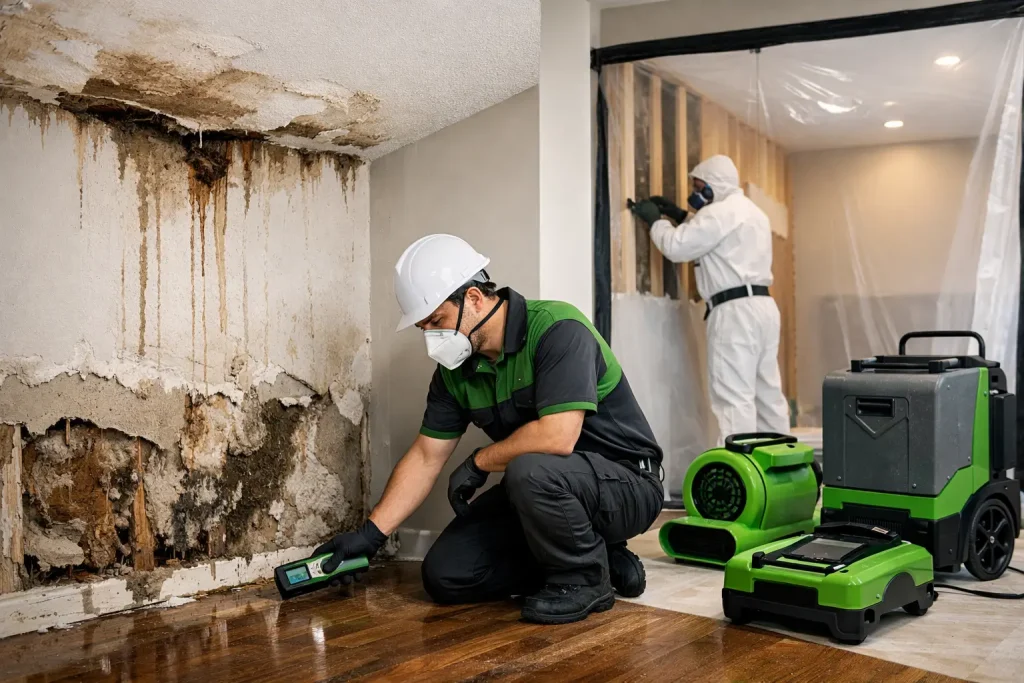
A wall stain that seems to appear overnight. Paint that starts to bubble for no clear reason. Flooring that suddenly feels uneven underfoot. The top signs of hidden water damage rarely start as dramatic flooding. More often, they show up quietly, behind walls, under flooring, above ceilings, or inside mechanical spaces, where moisture has time to spread before anyone realizes there is a problem.
That is what makes hidden water damage expensive. By the time visible damage appears, moisture may already have affected insulation, framing, drywall, subflooring, or nearby finishes. In residential and commercial properties alike, early detection matters because fast mitigation can limit structural damage, mold growth, and business or household disruption.
Why hidden water damage is easy to miss
Most property owners look for obvious leaks, but concealed moisture behaves differently. A small supply line leak inside a wall can continue for weeks. A roof issue may only show itself after repeated storms. An HVAC drain problem might create intermittent moisture that dries on the surface while remaining active underneath.
In many cases, the first clue is not standing water. It is a secondary symptom like odor, staining, swelling, or a change in texture. That is why inspection should focus on patterns, not just one isolated mark.
Top signs of hidden water damage inside a property
1. Discoloration on ceilings or walls
Brown, yellow, or copper-colored stains are one of the most common indicators of concealed moisture. These marks often point to an active or previous leak from plumbing, roofing, or an upper-level area. Even if the stain looks dry, that does not always mean the issue has been resolved.
A fresh leak often creates a defined ring or spreading patch. An older leak may leave a dull stain that property owners assume is cosmetic. It depends on the source, but staining should always be evaluated, especially if it grows, darkens, or returns after painting.
2. Bubbling paint or peeling wallpaper
When moisture builds behind a finished surface, it weakens adhesion. Paint can blister, crack, or bubble. Wallpaper may lift at the seams or pull away from the wall entirely. Bathrooms, kitchens, laundry rooms, and exterior-facing walls are common places for this to happen.
Not every paint issue means major water damage. Poor surface prep and humidity can also affect finishes. But when bubbling appears in a localized area, especially near plumbing or exterior penetrations, hidden moisture becomes a strong possibility.
3. Warped floors or soft spots underfoot
Flooring often reveals what walls hide. Wood flooring may cup, crown, or buckle. Laminate may swell at the seams. Vinyl plank can lift. Tile floors may loosen if the underlayment below has been affected.
Soft spots are especially concerning because they can indicate damage to the subfloor, not just the finish material. If the floor feels spongy near a refrigerator, dishwasher, toilet, sink, water heater, or exterior door, there may be a slow leak underneath.
4. A musty or damp odor that does not go away
One of the clearest warning signs is smell. Persistent musty odors often suggest trapped moisture in drywall, insulation, flooring materials, or hidden cavities. This is particularly common after roof leaks, plumbing failures, crawl space moisture issues, or improperly dried water losses.
If a room smells damp but surfaces look normal, that does not rule out damage. Odor frequently appears before visible staining, especially in enclosed spaces like closets, basements, utility rooms, and lower-level commercial suites.
5. Baseboards, trim, or cabinets that are swelling
Wood and composite materials absorb moisture. As they do, they expand, distort, and lose structural stability. You may notice baseboards separating from the wall, trim joints opening, or cabinet toe-kicks beginning to swell.
In kitchens and bathrooms, hidden leaks often show up first at lower materials because water follows gravity. Swelling around sink bases, vanities, and built-ins should be addressed quickly. What looks minor on the outside can indicate prolonged moisture inside the wall or beneath the cabinet.
6. Unexpected increases in water bills
A higher-than-normal water bill can point to a concealed plumbing leak, even when there is no obvious water visible. This is especially relevant for slab leaks, pipe leaks inside wall cavities, or running fixtures in vacant or rarely used spaces.
For property managers and commercial owners, utility tracking can be a useful early warning system. If water consumption jumps without a clear reason, it is worth investigating before damage spreads to finishes or adjacent units.
7. Mold spots or repeated mildew growth
Small patches of mold or mildew that keep returning are often symptoms of an unresolved moisture issue. Cleaning the surface may remove the staining temporarily, but if the source remains active, the problem usually returns.
Bathrooms naturally deal with humidity, so context matters. A little mildew around a shower with poor ventilation is different from recurring microbial growth on a bedroom wall, near a window header, or behind stored items in a finished basement. Repeated growth in the same area should never be treated as a surface-only issue.
8. Cracks, sagging, or changes in drywall texture
Drywall is highly vulnerable to water exposure. As it absorbs moisture, it can soften, swell, sag, or lose fastening strength. Ceiling drywall may begin to bow. Wall surfaces can develop hairline cracks, seam separation, or unusual texture changes.
This can be mistaken for normal settling, but the location and timing matter. If cracks appear together with staining, odor, or soft areas, moisture should be considered first. A sagging ceiling requires prompt attention because it may indicate active saturation overhead.
9. Rust, corrosion, or staining around plumbing and mechanical systems
Water damage does not always start in finished rooms. Mechanical areas often provide the first evidence. Look for rust on shutoff valves, corrosion on supply lines, staining around water heaters, condensation issues near HVAC equipment, or mineral deposits around pipe joints.
Some corrosion develops with age, so this is not always an emergency by itself. But when corrosion appears alongside damp materials, active dripping, or repeated condensation, it may point to a larger moisture problem affecting nearby framing or finishes.
10. Exterior clues that point to interior moisture
Some of the top signs of hidden water damage begin outside the building envelope. Missing shingles, damaged flashing, clogged gutters, failed caulking, cracked siding joints, and poor drainage near the foundation can all allow water to enter concealed areas.
This is where many property owners lose time. They focus on the interior stain but miss the exterior entry point. Unless both the source and the resulting damage are addressed, the problem can return after every storm or freeze-thaw cycle.
Where hidden water damage tends to show up first
The highest-risk areas are usually the ones with repeated water exposure or limited visibility. That includes behind showers and tubs, beneath sinks, around dishwashers and refrigerators, under toilets, inside utility rooms, around chimneys and roof penetrations, near windows, inside exterior walls, and below HVAC systems.
In commercial buildings, hidden water damage also shows up above drop ceilings, around rooftop units, within tenant demising walls, and near restrooms or janitorial closets. Multi-unit properties add another layer because water can travel from one space to another before the origin is found.
What to do if you notice these warning signs
The right response depends on the severity, but delay is usually what makes a manageable loss become a larger restoration project. If you suspect active water intrusion, the first priority is stopping the source if it can be done safely. That may mean shutting off a fixture valve, isolating a water line, or protecting the area from additional intrusion until a professional inspection can occur.
The next step is documentation. Take clear photos of visible damage, affected materials, and any suspected source areas. For insurance-related losses, early documentation can help establish the scope and timeline of the event.
After that, professional moisture inspection becomes critical. Surface appearance alone does not tell the whole story. Hidden water damage often requires moisture mapping, thermal imaging, and targeted testing to determine how far the water has traveled and what materials can be dried versus removed.
Why professional inspection matters
Water moves unpredictably. It follows framing, settles in insulation, migrates below flooring, and collects in cavities where airflow is limited. A wall may look intact while the backside is wet. A floor may appear dry while the underlayment remains saturated.
That is why experienced restoration contractors use a combination of visible inspection, moisture detection tools, and documented drying protocols. The goal is not just to clean up what you can see, but to identify the full extent of impact and restore the property properly. Apollo Construction & Renovation Corp. approaches water losses with that full-scope mindset, especially when mitigation, documentation, repairs, and reconstruction all need to stay coordinated.
If something in your property looks off, smells off, or feels different than it did last week, trust that instinct. Water damage rarely improves on its own, and the earlier you address hidden moisture, the more options you usually have to protect the structure, control costs, and keep repairs focused where they belong.
Every property and insurance policy is different. Contact Apollo to discuss the work your property may need; your insurer determines coverage.